12 February 2026
Conspirata
Cicero #2
Historical Fiction - 2009
Character
Tiro is the slave of Marcus Tullius Cicero, a great orator
Setting
The series is set in ancient Rome at the time of Cicero from 79BC to 43BC.
Plot
Cicero schemes with and against all the other scheming politicians in Rome to keep the Republic together, but he makes enemies and mistakes along the way, has great victories, and gives a lot of speeches.
⭐⭐⭐⭐ ¼
This is an updated review of the books of Robert Harris's trilogy about Cicero, composed of the books Imperium, Conspirata, and Dictator, which depict the events leading up to the fall of the Roman Republic from the point of view of Tiro, Cicero's slave and scribe. The depiction is apparently fairly accurate and definitely very compelling.
These books do a great job of presenting the history, the corruption, and the back-stabbing of the Roman Republic in a really dramatic way. Of course, this is written from the point of view of someone who is loyal to Cicero, so the events of the time are filtered through that lens. I felt like the complicated political climate is represented well. This isn't a series where the hero just skates through. Things are tough, and Cicero makes choices and says things that really come back to bite him later.
These books are not especially light, fun, or uplifting, and there were times when I wondered what Cicero was thinking, especially in Conspirata. However, by the last book, Dictator, Tiro has a bit of emotional distance from Cicero, so despite the ups and downs, the book is more thoughtful and less tense.
For all three books, the characterization, setting and plot are incredible. The characters develop throughout the books, changing as the circumstances around them change. The books very much immerse the reader in the feel of the Roman Republic, with all its slaves, wealth, and social inequality. The insane personal debts needed to finance a political career make the corruption seem inevitable. And each senator with a huge debt, the desire for power, and the need for allies to keep from being prosecuted forms a perfect basis for a novel (or three).
Don't understand why Julius Caesar was murdered or what the problem was with Mark Antony? The reader will absolutely know by the time they are done with this trilogy.
While I really like these books, I won't read them again, I think. They are incredibly interesting and well written, but I don't feel such a strong connection to the characters that I want to spend more time with them.
Should you read this series? If you don't hate books about history and politics, I think it is worth your time, especially as it is incredibly instructive to see what led to the fall of the Republic. Often, fiction gives readers more of a stake in history than a history book would.
These books do a great job of presenting the history, the corruption, and the back-stabbing of the Roman Republic in a really dramatic way. Of course, this is written from the point of view of someone who is loyal to Cicero, so the events of the time are filtered through that lens. I felt like the complicated political climate is represented well. This isn't a series where the hero just skates through. Things are tough, and Cicero makes choices and says things that really come back to bite him later.
These books are not especially light, fun, or uplifting, and there were times when I wondered what Cicero was thinking, especially in Conspirata. However, by the last book, Dictator, Tiro has a bit of emotional distance from Cicero, so despite the ups and downs, the book is more thoughtful and less tense.
For all three books, the characterization, setting and plot are incredible. The characters develop throughout the books, changing as the circumstances around them change. The books very much immerse the reader in the feel of the Roman Republic, with all its slaves, wealth, and social inequality. The insane personal debts needed to finance a political career make the corruption seem inevitable. And each senator with a huge debt, the desire for power, and the need for allies to keep from being prosecuted forms a perfect basis for a novel (or three).
Don't understand why Julius Caesar was murdered or what the problem was with Mark Antony? The reader will absolutely know by the time they are done with this trilogy.
While I really like these books, I won't read them again, I think. They are incredibly interesting and well written, but I don't feel such a strong connection to the characters that I want to spend more time with them.
Should you read this series? If you don't hate books about history and politics, I think it is worth your time, especially as it is incredibly instructive to see what led to the fall of the Republic. Often, fiction gives readers more of a stake in history than a history book would.
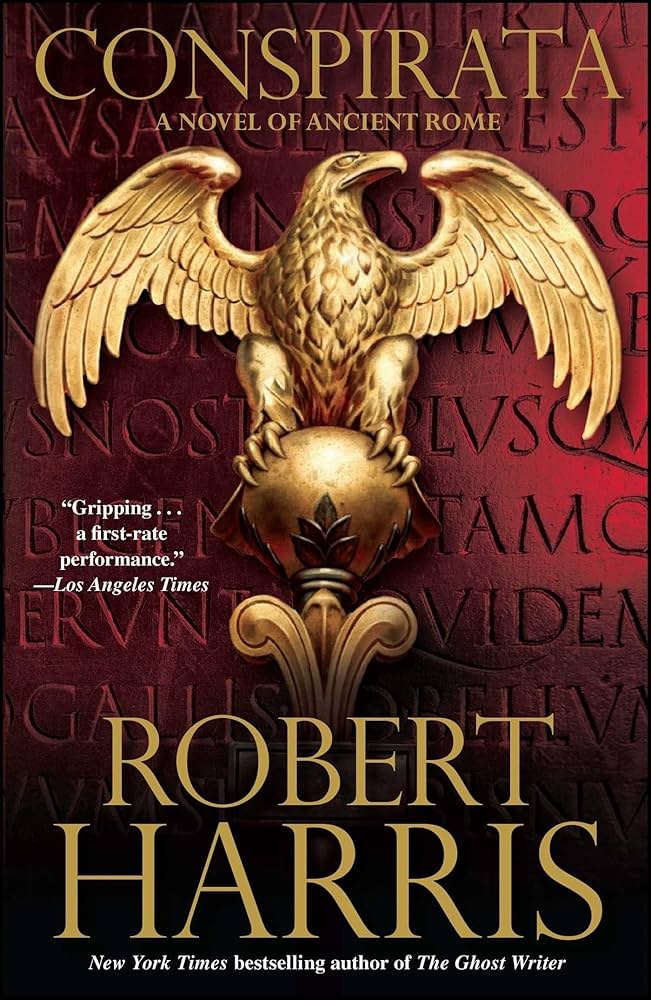
Fiction: Conspirata by Robert Harris
Cicero #2
Hutchinson, 2009-10-08
0-09-180100-1
464 pages
Cicero #2
Hutchinson, 2009-10-08
0-09-180100-1
464 pages